Department of Electrical and Computer Engineering · Johns Hopkins University
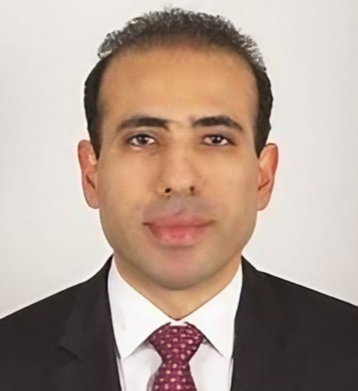
View Official JHU Faculty Profile ↗Farshad Firouzi is a faculty member in the Department of Electrical and Computer Engineering at Johns Hopkins University and a member of the Data Science and AI Institute. His research focuses on the design, optimization, and deployment of end-to-end AI systems — spanning the full stack from devices and circuits to foundation models, agentic AI, and real-world intelligent systems. He advances cross-layer innovations at the intersection of AI and systems engineering, targeting applications in AIoT, embodied and physical AI, autonomous systems, smart and connected health, aerospace, and defense.
A central thrust of his work is trustworthy AI, building systems that are efficient, adaptive, resilient, secure, and interpretable, deployable across the edge-to-cloud continuum. His research engages with emerging frontiers including microelectronics, electronic design automation (EDA), AI accelerators, neuromorphic and in-memory computing, silicon photonics, AI hardware-software co-design, hardware security, agentic and self-improving AI, generative world models, and physics-informed AI. He is particularly focused on how intelligent systems can operate reliably under real-world constraints — in resource-limited, safety-critical, and adversarial environments.
Prior to joining Johns Hopkins, Firouzi held faculty positions at Arizona State University and Duke University. He earned his PhD in Computer Science and Engineering from the Karlsruhe Institute of Technology. Beyond academia, he is a technology entrepreneur with industry experience at leading research and innovation organizations, including imec.
Firouzi has authored and edited several books on AI, AIoT, smart and connected health, and microelectronics. He serves on the editorial boards of several journals, including the IEEE Internet of Things Journal, and on the technical program committees of prominent conferences such as DATE, DAC, ICCAD, HOST, and VTS. He is also the Founder of the IEEE International Conference on Omni-Layer Intelligent Systems (COINS).
Research papers and other publications: Google Scholar ↗ · Books and edited volumes: Amazon Author Page ↗